
A consultant can’t make a European immigration authority process an application faster. Immigration consultants for Europe can, however, help you prepare a complete, consistent application and address eligibility or document issues that could otherwise cause delays. The relevant authority controls processing and makes the decision.
When planning a skilled move from the UAE, clear guidance can help you understand your options. European immigration routes differ by country and purpose, so the right pathway depends on your qualifications, work or business plans, and the destination’s requirements.
This guide explains how consultants assess eligibility, support skilled immigration applications, and compare European destinations. It also sets out what professional support can and cannot do, and what to consider when assessing a consultant. This will help you decide whether to manage the application yourself or seek structured guidance.
Key Takeaways
- Match your qualifications and work or business plans to the destination’s visa pathway before preparing an application.
- Eligibility assessment and careful document preparation can help make an application more complete, but consultants cannot control official processing or decisions.
- Compare European destinations by the purpose of your move, such as skilled work, self-employment, business residence or talent-based migration.
- Before engaging a consultant, understand their relevant credentials, the support they provide and the limits of their role.
Skilled migration
Skilled migration starts by matching your occupation and work plans to a country’s route. For UAE-based applicants, the first step is identifying whether a destination requires employer sponsorship or offers another pathway.
Work Permits
Work permit assistance can clarify eligibility, sponsorship requirements, and the documents that support your application. For a role in the Netherlands, assess whether the position and employer meet the applicable sponsorship conditions before assembling your evidence. Technology, finance, healthcare, and engineering are among the sectors with job opportunities there. A careful review connects your experience to the role and permit pathway.
Germany offers another route for some non-EU professionals. Its Opportunity Card, known as the Chancenkarte, is points-based and lets applicants seek work without an upfront employer sponsor. It has been available since June 2024 and is valid for 12 months. According to Gesetze im Internet, the Chancenkarte is initially issued for up to one year.
Visa Options
Work, study, business, and visitor visas serve different purposes, so choose the route that matches your plans. A skilled worker visa relates to employment; a study visa supports education, while a visitor visa is for a temporary visit. Business residence pathways address business activity, not an employee’s job search. This distinction helps keep your documents aligned with the purpose of your application.
For example, Poland’s Type B work permit applies to foreign board members of a Polish company who reside in Poland for more than six months per year. The role and residence pattern therefore matter when considering this permit. Visitor visa assistance is a separate service for travel, not a substitute for work authorization.
Language can also shape your search. German or English may be required for skilled workers, depending on the employer and visa type. English is widely spoken in the Netherlands, which can make it easier for expatriates to settle in. Assess language expectations alongside your occupation, employer, and destination before choosing a route.
Skilled immigration support can help organize an eligibility review, route selection, and application evidence. Prepare a clear record of your qualifications, work history, proposed role, and destination, then compare these details with the pathway’s requirements. This helps keep your application organized, but a consultant cannot control an authority’s processing speed or decision.
Application support and eligibility assessment
A sound application starts with a route that fits your purpose and circumstances. Expert guidance can clarify eligibility, employer responsibilities, and the evidence your application should include.
Step-by-Step Application Process
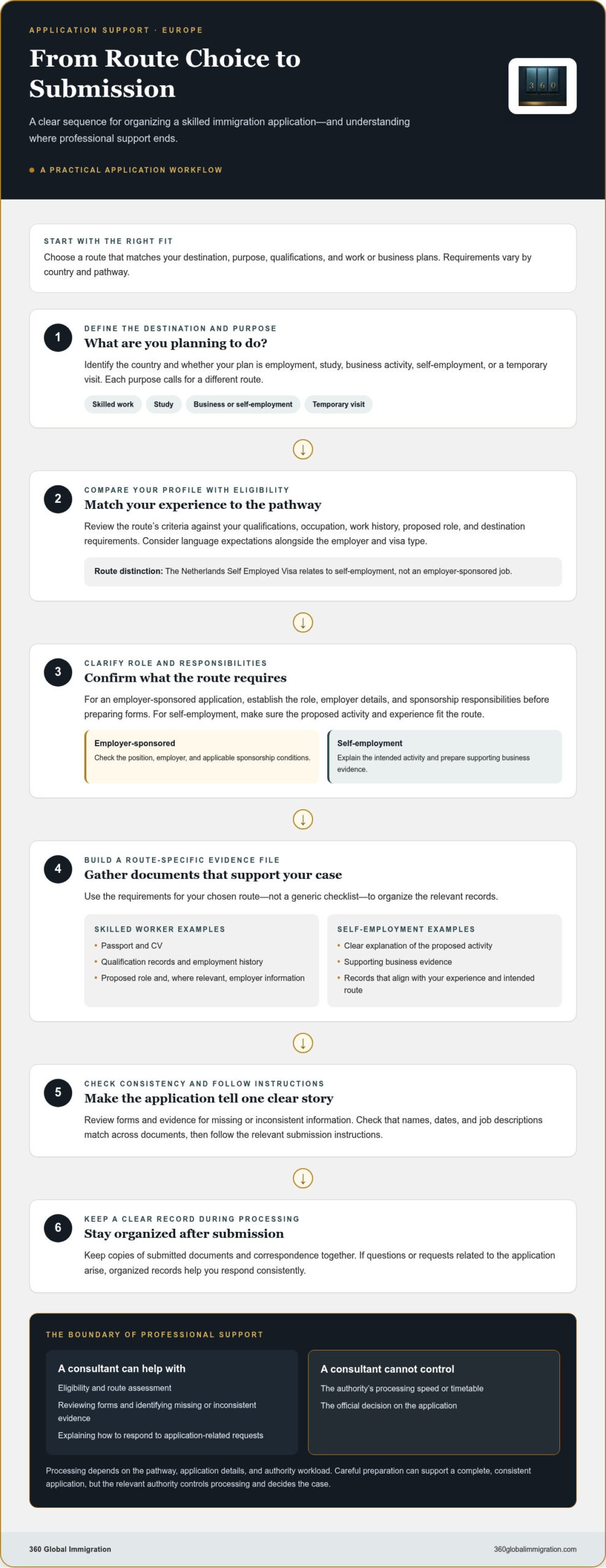
Start by identifying your destination and the purpose of your stay. Compare your profile with the pathway’s eligibility criteria, including your employment or self-employment plans. For an employer-sponsored application, clarify the role, employer details, and sponsorship responsibilities before preparing forms. Then assemble supporting evidence, check each answer for consistency, and follow the relevant submission instructions. This sequence helps keep the application organized.
Required Application Documents
Build your document file around the route rather than relying on a generic checklist. A skilled worker might organize a passport, CV, qualification records, employment history, and role details. An employer-sponsored application may also need information about the position and sponsoring organization. For self-employment, prepare a clear explanation of the proposed activity and supporting business evidence. Check that names, dates, and job descriptions match across all documents.
Application Processing
Application support focuses on readiness and clear follow-through. A representative can review forms, identify missing or inconsistent evidence, and explain how to respond to requests related to your application. Keep copies of submitted documents and correspondence together so you can answer questions consistently. Processing speed depends on the pathway, application details, and authority workload; preparation cannot control the official decision or timetable.
Eligibility review should also distinguish employment from independent business activity. For example, the Netherlands Self Employed Visa relates to self-employment, not an employer-sponsored job. Confirm that your intended activity, experience, and supporting documents tell one consistent story before submission.
Immigration destinations and country coverage
Visa and residence permit requirements depend on the destination and route. Match your purpose, eligibility, and documents to the relevant country’s program. Examples include France talent pathways, UK innovation, Netherlands self-employment, and business residence routes in Cyprus and Ireland.
European options also include skilled migrant, global impact work and residence, investor resident, family-joining, study, and visitor routes. The right country depends on which route fits your plans.
European Destination Options
Compare destinations by the activity you intend to pursue, not by a country’s reputation alone. France and the UK have talent or innovation pathways, while the Netherlands has a self-employment route. Cyprus and Ireland offer business residence options, and Denmark has a startup pathway. These examples can help narrow your search, but each program has its own eligibility criteria and supporting documents.
Poland is another European career destination, with a population of approximately 38 million. That figure describes the country’s scale, not the availability of a particular job or visa. Assess your occupation, prospective role, employer, and intended residence before choosing Poland. A trusted comparison weighs those practical factors alongside education, career goals, and the route’s purpose.
Visa and Residence Permit Requirements
Requirements vary by country and visa category. Identify the route first, then review its eligibility criteria and prepare documents that support your stated purpose. For example, a study application should relate to your education plans, while a family-joining application concerns joining family. Work, investment, and visitor routes each require evidence relevant to their purpose.
For popular destinations, don’t assume one European permit covers every country or purpose. Compare the specific program, applicant criteria, and required documents. If weighing Europe against Australia, treat them as separate immigration systems rather than carrying assumptions from one country into another.
Before committing, make a simple comparison: list your intended activity, the countries with a matching route, and the eligibility evidence each program requires. Then compare the documentation involved and how closely your qualifications or plans fit. This makes country selection more precise and helps identify where expert review could be useful.
Choosing and verifying immigration consultants
For UAE residents comparing immigration consultants for Europe, a visa consultant should explain the route, responsibilities, and limits of their support. International migration advice should relate to your destination and application type, not rely on broad claims about opportunities abroad.
Use these checks before appointing an adviser:
- Match expertise to the route. Ask how their experience relates to your destination and application type, such as skilled migration or business residence.
- Review credentials. Confirm the adviser’s identity and any claimed professional registration with the relevant issuing body. Registration rules differ between countries and roles, so assess the credential against the service being provided.
- Get the scope in writing. The agreement should explain the work covered, documents you must provide, communication arrangements, and applicable charges.
- Assess the explanation. A capable adviser should explain eligibility factors and identify gaps using your actual profile, not a generic promise.
Ask for a clear explanation of the application process, including who prepares the forms and who submits them. For an employer-sponsored application, distinguish the consultant’s administrative assistance from the employer’s sponsorship responsibilities. A good adviser explains this boundary without implying control over an embassy, immigration authority, or hiring decision.
Be cautious of promises that a visa or job is guaranteed. A consultant cannot guarantee either outcome: the relevant authority decides visa applications, while an employer makes hiring decisions. Wording alone cannot make an ineligible application eligible. Assess advice by its accuracy, clarity, and relevance to your circumstances.
Keep a record of the signed agreement, payment terms, document handovers, and written advice. When comparing immigration consultants for Europe, consider these practical details alongside the adviser’s knowledge of your route. Choose a professional who explains both opportunities and limitations before you commit, rather than relying on broad claims about success.
For UAE-based applicants assessing European pathways, request guidance on your immigration options as a next step.
360 Global Immigration: France Passeport Talent
360 Global Immigration can guide applicants considering France Passeport Talent and help them understand how this pathway relates to their professional plans. This is a practical next step when you have identified France as a destination and want focused support with the talent-based visa route.
Other pathways include the UK Innovator Founder Visa, Netherlands Self Employed Visa, and Cyprus Business Residence Visa. The appropriate option depends on whether your goal involves talent, innovation, self-employment, or business residence. A clear discussion of your intended activity and destination helps focus the guidance on a relevant route.
Contact 360 Global Immigration to discuss your European migration plans.
Make Your Next Move With Clarity
Turn your broad migration goal into a focused plan. Identify the destination and pathway that best fit your professional or business intentions, then consider how your circumstances relate to that route. When choosing immigration consultants for Europe, look for clear, relevant guidance rather than promises about outcomes.
For applicants considering France Passeport Talent, UK Innovator Founder Visa, or Netherlands Self Employed Visa, 360 Global Immigration can provide guidance on these pathways. A focused discussion can help you understand which option aligns with your plans and what application support involves.
Take the next step at a pace that feels right for your decision. Contact 360 Global Immigration to discuss your European migration plans and move forward with greater clarity.
Frequently Asked Questions
Can a consultant speed up my visa application?
A consultant can’t change an immigration authority’s processing queue. Their role is to help prevent avoidable delays caused by incomplete forms, inconsistent details, or missing evidence. For example, employment dates can be checked against supporting records before submission. Ask what preparation and follow-up support is included, and distinguish those tasks from decisions or timelines controlled by authorities.
Do you guarantee visas or jobs?
No. 360 Global Immigration doesn’t guarantee visas or jobs, and it doesn’t provide job placement services. Visa decisions belong to the relevant authorities, while employers make hiring decisions. A responsible adviser can explain the pathway and assess your application, but can’t promise the outcome. Treat any claim of guaranteed approval or employment as a reason to pause and review the terms carefully.
How do I choose a reputable immigration consultant for Europe?
Choose a consultant who can explain how their advice applies to your intended country and visa category. Ask for an honest assessment of your plans, the scope of the service, and your responsibilities before proceeding. For example, someone pursuing France Passeport Talent needs guidance relevant to that route, not generic advice about moving abroad. Clear answers should help you understand both the proposed support and its limits.
What services do European immigration consultants provide?
Services vary, but may include immigration consultation, visa application assistance, document verification, immigration strategies, and expert legal guidance. 360 Global Immigration supports pathways such as France Passeport Talent, the UK Innovator Founder Visa, and the Netherlands Self Employed Visa. Its Visit Visa Services address travel applications. Identify the exact pathway you need, then establish which application tasks the consultant will handle.
How can I verify an immigration consultant’s credentials and avoid scams?
Ask for the consultant’s full name and details of any claimed professional registration, then verify them with the issuing organization. Check that the person you speak with matches the listed identity and that their stated role is relevant to your matter. Review the written agreement before paying. Be cautious of pressure to act immediately, vague service descriptions, or promises of guaranteed approval.
Can an immigration consultant guarantee a European visa or residency approval?
No. A consultant cannot guarantee European visa or residency approval because the relevant authority makes that decision. Instead, look for a clear explanation of the route, the evidence supporting your application, and any gaps that need attention. Ask the adviser to describe the service in writing. This gives you a practical basis for assessing the support without mistaking it for official approval.