
A Schengen visa refusal doesn’t automatically prevent you from travelling or mean your next application will be refused. Reapplying for a Schengen visa after refusal is possible, and there’s no general Schengen-wide waiting period after an ordinary short-stay refusal. The refusal is recorded in the Visa Information System for five years, so your next application should address the reasons stated in the decision.
A refusal letter can be difficult to interpret, especially when it marks boxes without much explanation. Those selected grounds indicate the authorities’ concerns. A stronger application starts by understanding each one, rather than submitting the same documents again.
This guide explains what the refusal boxes mean, how a previous decision may affect future applications, and how to address each concern before applying again. You’ll learn to identify gaps in your evidence, show what has changed, and prepare an application that responds directly to the refusal grounds.
Key Takeaways
- Read each checked refusal ground alongside the explanation so you can identify what needs to change in a new application.
- Choose between appealing and submitting a fresh application by weighing the refusal reasons, the relevant deadline, and whether you can provide stronger evidence.
- A previous refusal is recorded in the Visa Information System, but it doesn’t automatically mean a later application will be refused.
- Address each concern with relevant, consistent documents and apply through the Schengen country responsible for your genuine travel plans.
Will a visa refusal affect my future travel applications?
A refusal doesn’t automatically prevent you from applying again, but the decision may affect how authorities assess your next application. Choose between an appeal and a fresh application based on the refusal grounds, the evidence available, and the applicable deadline.
-
Review Country-Specific Appeal Procedures and Deadlines
Identify the refusing country’s procedure and deadline before deciding. France generally requires a reasoned administrative appeal within 30 days for a short-stay refusal; Germany’s remonstration procedure ended on 1 July 2025, with a judicial remedy available. Spain’s appeal deadline is two months. Italy allows up to 60 days, Portugal 15 days, and the Netherlands four weeks. Don’t assume one country’s process applies elsewhere.
-
Plan Where and How to Reapply
Apply through the Schengen country genuinely responsible for your trip, rather than changing destinations to avoid a previous refusal. For a multi-country itinerary, identify the responsible country under the destination rules. As a UAE resident, prepare your application for that country and follow its application procedure in the UAE, addressing the refusal grounds with relevant evidence.
- Choose an appeal when the decision appears to have overlooked evidence or you can challenge the stated grounds through the required procedure. Article 32(3) of the EU Visa Code provides a right to appeal. A fresh application may suit a case where you can correct gaps or show meaningful changes. Compare the deadline with your travel plans, and don’t let an appeal period pass while deciding.
- Before applying again, match each refusal reason to a specific response. If the concern relates to your travel purpose, clarify the itinerary and supporting documents. If it concerns funding, provide evidence that directly addresses it. There’s no general Schengen-wide mandatory waiting period after an ordinary short-stay refusal, so focus on addressing the grounds rather than waiting without changing your application.
Effect of a previous refusal on future applications
A previous refusal remains relevant, but it doesn’t automatically determine the outcome of a later application. Build your new application around the decision and the evidence that addresses its concerns.
-
Assess the Effect of the Previous Refusal
Review the refusal letter and preserve a copy for your next application. Schengen authorities store visa records in the Visa Information System for five years, so a later assessment can take the earlier decision into account. Article 21 of Regulation (EC) No 810/2009 provides for assessing a new application against an earlier refused application. Don’t assume the refusal itself settles the new decision.
-
Strengthen the New Application with Evidence
Match each concern in the decision to relevant, current evidence. If the letter questions your travel purpose, include documents that clarify your itinerary and reason for visiting. If it raises concerns about available funds, provide clear financial records that address them. Keep dates, names, and explanations consistent across forms and supporting documents. Unexplained differences can leave the original concern unresolved.
- Explain what has changed since your earlier application, using evidence rather than broad assurances. A revised itinerary, updated supporting records, or a clearer explanation may show how the new application responds to a specific refusal ground. The European Commission confirms that applicants may submit another Schengen visa application after refusal and recommends considering the earlier reasons. Address each point directly instead of resubmitting unchanged documents.
- Present the new application as a complete, coherent case. Organize the documents so each relevant refusal ground has a corresponding response, and make sure your explanation matches the evidence. For instance, your stated travel purpose should align with your itinerary and supporting documents. Avoid unrelated paperwork that obscures the key points. A focused application helps the assessing authority understand what has changed and how the earlier concern has been addressed.
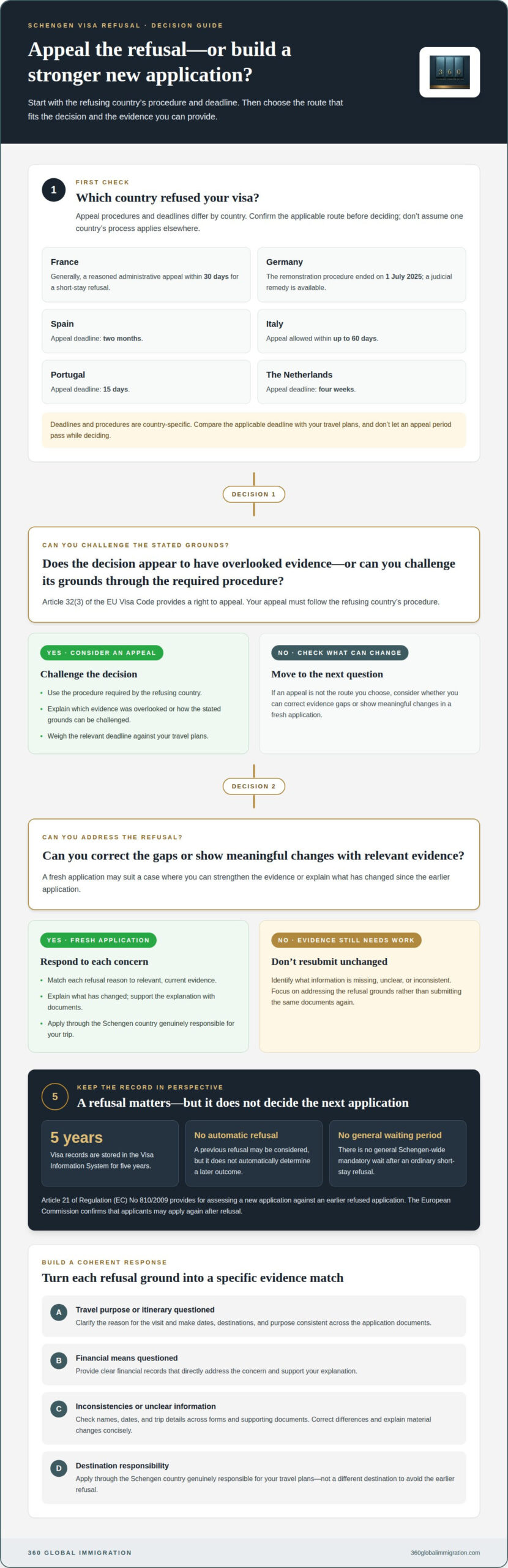
Addressing the reasons for refusal before reapplying
Schengen refusal grounds may concern an unclear travel purpose, supporting evidence, financial means, or whether you’ll leave after your visit. Treat each checked box as a specific issue to address, not as a reason to resend the same application.
- Turn each checked box into a clear concern before preparing documents. Read its wording alongside any explanation in the refusal letter, then note what information was missing, unclear, or inconsistent. For example, if the concern is your travel purpose, provide a clearer account of your planned visit, not an unrelated stack of extra paperwork.
- Match every concern to evidence that addresses it directly. If the letter questions your itinerary, make sure the dates, destinations, and stated purpose are consistent across your application documents. If it questions your financial means, organize relevant records so the information is clear and supports your explanation. A general cover letter without evidence tied to the specific concern may not be enough.
- Check names, dates, and trip details across your application before submission. For instance, a different travel date in one document can make an otherwise clear itinerary harder to assess. Correct inconsistencies rather than trying to explain them away. If a document has changed since your earlier application, make sure the new version supports the account you provide.
- Explain material changes since the refused application in a concise cover letter. Identify the earlier concern, state what is different, and refer to the supporting document. If your itinerary has changed, for example, explain why and show how the updated plan aligns with your application. Don’t claim that circumstances changed if your documents don’t support that claim.
- Review the refusal letter against your final application. Confirm that each stated concern has a corresponding explanation or document, and remove material that distracts from your response. This final comparison helps you catch any unanswered grounds. A focused, consistent application makes it easier to see how you have addressed the reasons for refusal.
What a Schengen visa refusal means
A fresh application requires another visa fee, which remains non-refundable if the application is refused. For applicants in the UAE, use the AED amount displayed during the application process for the responsible country.
- Treat the refusal as a decision on the application you submitted, not an automatic ban on future travel. An ordinary Schengen visa refusal doesn’t automatically create an entry ban. It also doesn’t grant permission to travel: you need an approved visa before making a trip that requires one.
- Use the refusal letter to identify the authority’s stated concerns. Each checked box indicates a refusal ground, while any accompanying explanation may provide context. For example, a concern about the purpose of your visit means the application didn’t establish that point sufficiently. Treat the letter as an explanation of the decision, not as a permanent finding about you.
- Separate a visa refusal from the rules governing a later visit. An approved short-stay visa permits travel subject to its conditions; it doesn’t allow stays beyond 90 days in any 180-day period. A refusal means that application didn’t provide permission to travel. Don’t make travel plans on the assumption that submitting an appeal or new application authorizes entry.
- Understand the fee consequences before starting another application. The Schengen visa fee is non-refundable regardless of the outcome, so a refusal doesn’t return the amount paid. A new application requires a new fee payment. Check the AED amount shown for the relevant application route, and account for any separately displayed application-centre charges.
- Use the decision to choose your next step. If you can directly address the stated grounds with a stronger application, prepare that evidence before submitting again. If you believe the decision overlooked relevant information, consider the appeal procedure and deadline for the refusing country. For guidance on available visit visa options, review the route that matches your travel purpose.
360 Global Immigration
360 Global Immigration can help you consider the right immigration route when your plans extend beyond a short Schengen visit. A refusal may prompt you to reassess your travel purpose and longer-term plans, but business residence and talent-based visas serve different purposes from a short-stay Schengen visa.
360 Global Immigration specializes in business residency and talent-based visa programs for Europe and the UK. The right route depends on your intended activity and destination. These pathways aren’t substitutes for addressing a short-stay visa refusal; they may be relevant if your plans have changed.
For guidance on the immigration route that fits your plans, contact 360 Global Immigration.
Choose the route that fits your next step
Before reapplying for a Schengen visa after refusal, decide whether you still plan a short visit or whether your plans have shifted toward building a professional future abroad. A short-stay application and a business or talent-based residence pathway serve different goals. Choose your next step based on what you intend to do, not simply on the previous decision.
If your plans now involve a longer-term professional move, 360 Global Immigration can guide you through relevant pathways, including the France Passeport Talent, UK Innovator Founder Visa, and Netherlands Self Employed Visa. These routes address distinct professional circumstances; they aren’t substitutes for a short-stay visa or a way to bypass its requirements. A clear understanding of your purpose helps you focus on the application route that matches it.
Consider your intended destination, activity, and timeframe before deciding how to proceed. For tailored guidance on the relevant immigration pathway, contact 360 Global Immigration. A considered next step can help you move forward with clarity and confidence.
Frequently Asked Questions
What do the boxes on a Schengen visa refusal letter mean?
The checked boxes identify the refusal grounds applied to your case. Read each selected label alongside any written explanation, since the box alone may not show which document or detail raised concern. If several grounds are marked, consider them separately: note the evidence related to each and whether the letter explains its effect on the decision. This gives you a clearer basis for responding.
What If Your Travel Plans Have Changed After Refusal?
Describe your current plans accurately in any new application. If your itinerary or main destination has changed, make sure your application and supporting documents reflect the change, and apply through the country responsible under the Schengen destination rules. Don’t choose a different country simply to avoid the earlier refusal. For example, revised travel dates should match across your itinerary and application.
What Should You Check Before Reapplying?
Check that your passport meets the stated validity and format requirements: it must remain valid for at least three months after departure, have been issued within the last 10 years, and contain at least two blank pages. Also review the photographs and make sure they meet the application requirements. Then check that your application details match your intended travel dates and destination.
When Can You Reapply After a Schengen Visa Rejection?
You can submit a fresh application once you’re ready to present a complete file that addresses the refusal grounds. There’s no general Schengen-wide mandatory waiting period of 30, 60, or 90 days after an ordinary short-stay refusal. If you’re considering an appeal instead, its deadline and procedure depend on the country that refused your application, so treat those separately.
Can I reapply for a Schengen visa immediately after refusal?
Yes, you may submit another application without waiting for a fixed Schengen-wide period, provided you’re ready to apply again. “Immediately” doesn’t mean submitting the same application again: first identify the reasons in your refusal letter and prepare a response supported by relevant documents. Also consider whether an appeal is more appropriate, particularly if the refusing country’s appeal deadline is still running.
How long should I wait before reapplying for a Schengen visa after refusal?
There’s no universal waiting period after an ordinary short-stay refusal. If you’re reapplying for a Schengen visa after refusal, base your timing on whether you can address the recorded concerns with a complete, consistent application. Waiting without improving your application may not resolve those concerns. If you plan to appeal, follow the refusing country’s deadline rather than relying on a general waiting period.